All News

Have you ever set out to make a minor improvement to a process that has always been in place… only to end up transforming the way you work from top to bottom, to the great benefit of several colleagues? It's a rare situation, but it's exactly what happened during a recent development for one of our clients in the publishing industry.

"FileMaker, Airtable or Access?" — this question comes up constantly in the searches of companies that want to move beyond Excel without launching a traditional development project. The three names often appear in the same conversation, as if they were three variants of the same tool. They are not: they come from different philosophies, serve different audiences and, above all, have different limits that are not always visible at first click. This comparison takes an objective look at what really sets them apart, in a particular context: FileMaker has just received, in 2026, for its 40th anniversary, its most important update in several years.
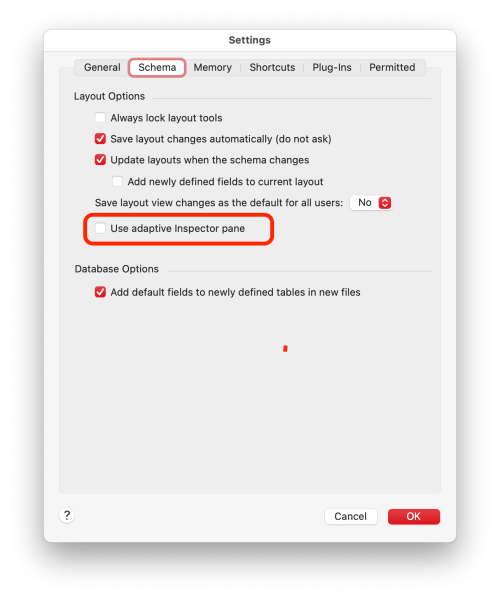
A low-key update that went almost unnoticed, yet deserves a closer look. With FileMaker 26.0.1, Claris had introduced the adaptive Inspector: a new Inspector that rearranges its tabs and options depending on the selected object. On paper, a good idea. In practice, as is fairly often the case, a poorly executed idea, and above all one designed without consulting developers, who could no longer find their settings in the same place from one click to the next. Did we really need this as a priority?

"Freelance FileMaker developer" or "FileMaker agency": the two expressions often turn up in the same searches, made by the same business owners at the same moment — the one when they have to choose who will design the business application the company needs. The question of price almost always comes first. Yet that is not the right way in, or at least not the only one: a freelance and an agency are not two versions of the same service at different rates, they are two distinct ways of organising a project, each with its own real advantages and its own risks. And on a technology as specific as FileMaker, where skills are rarer than for a general-purpose language, these differences weigh even more than in conventional web development.